
No two duties are alike
Early, late, split, Friday and Saturday only. Maintained in a spreadsheet, the same patterns get drawn by hand again every month.
The shift planning chapterThree people at lunch, eight in the evening, twice that at the weekend. Part-time, casual staff and full-time side by side, and the plan rarely stands unchanged for two weeks. That is why planning, time tracking and information are the same program here.
Three things that cost more time in hospitality than the planning itself.
Early, late, split, Friday and Saturday only. Maintained in a spreadsheet, the same patterns get drawn by hand again every month.
The shift planning chapterSomeone drops out, the plan gets turned around — and then the phone chain begins. The next lunchtime somebody still turns up at the wrong time.
The messages chapter20 hours, 30 hours, casual staff on call: everyone has a different target. At the end of the month each should get one figure nobody has to argue about.
The working time models chapterThe plan is made in the grid, the change goes out as a message, and the time tracking works with what was actually done.
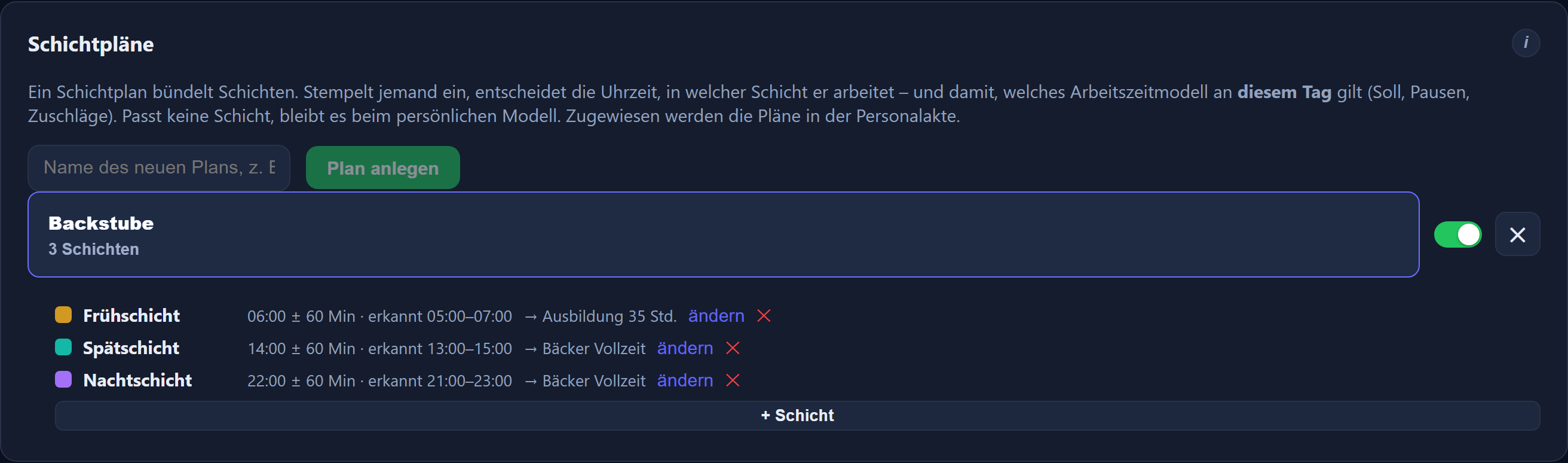

A shift consists of a time frame, a break rule and a colour. In the monthly grid it is only assigned after that — across several days or several people at once.
For rolling duties you set which shift applies in week 1, week 2 and so on. The plan is then calculated ahead and stays overridable on individual days.
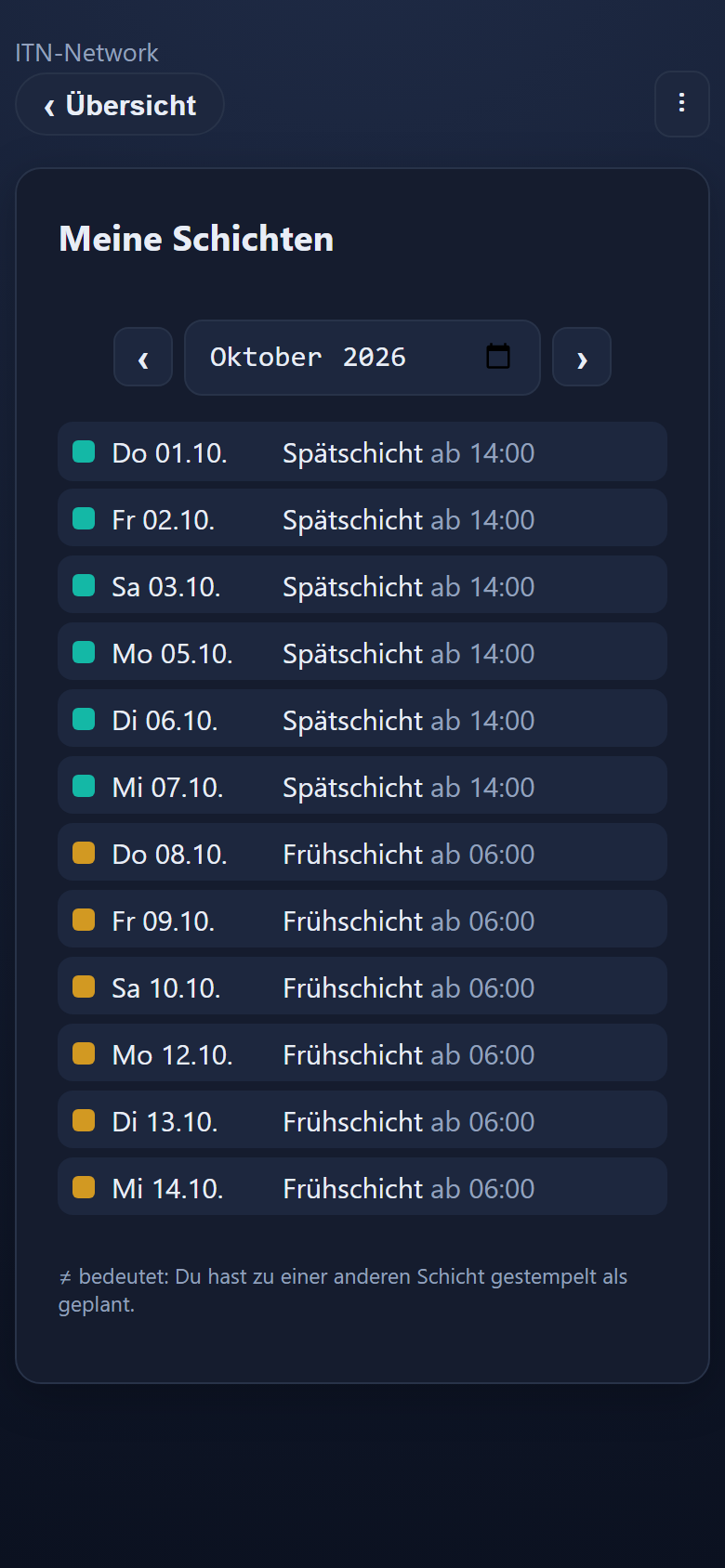
The mobile app has a tile for it. Who is rostered when is on the phone — no notice board, no asking. For the board itself the program supplies a landscape PDF with a colour key.
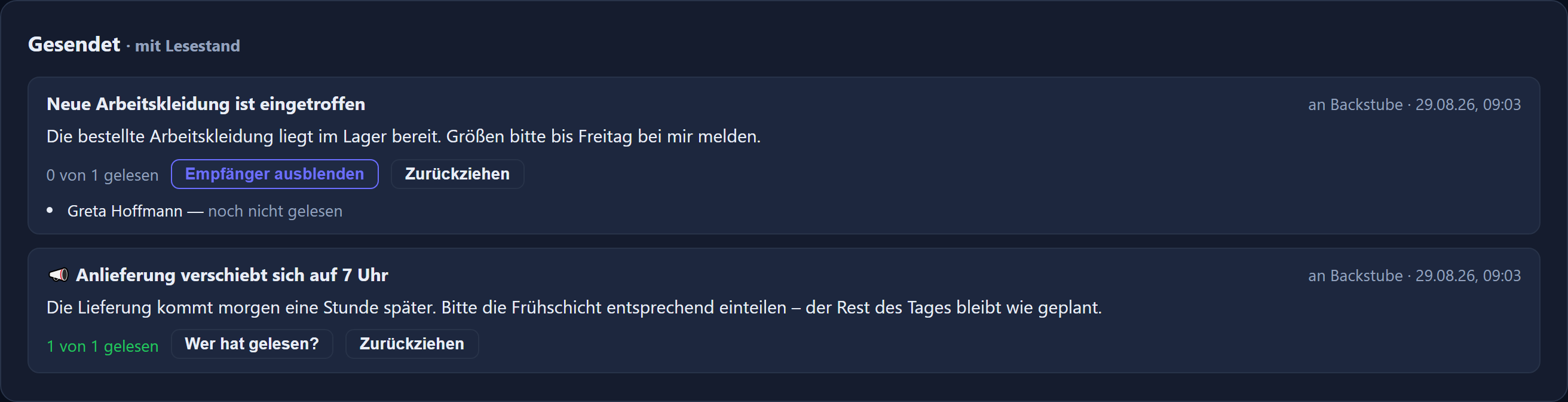
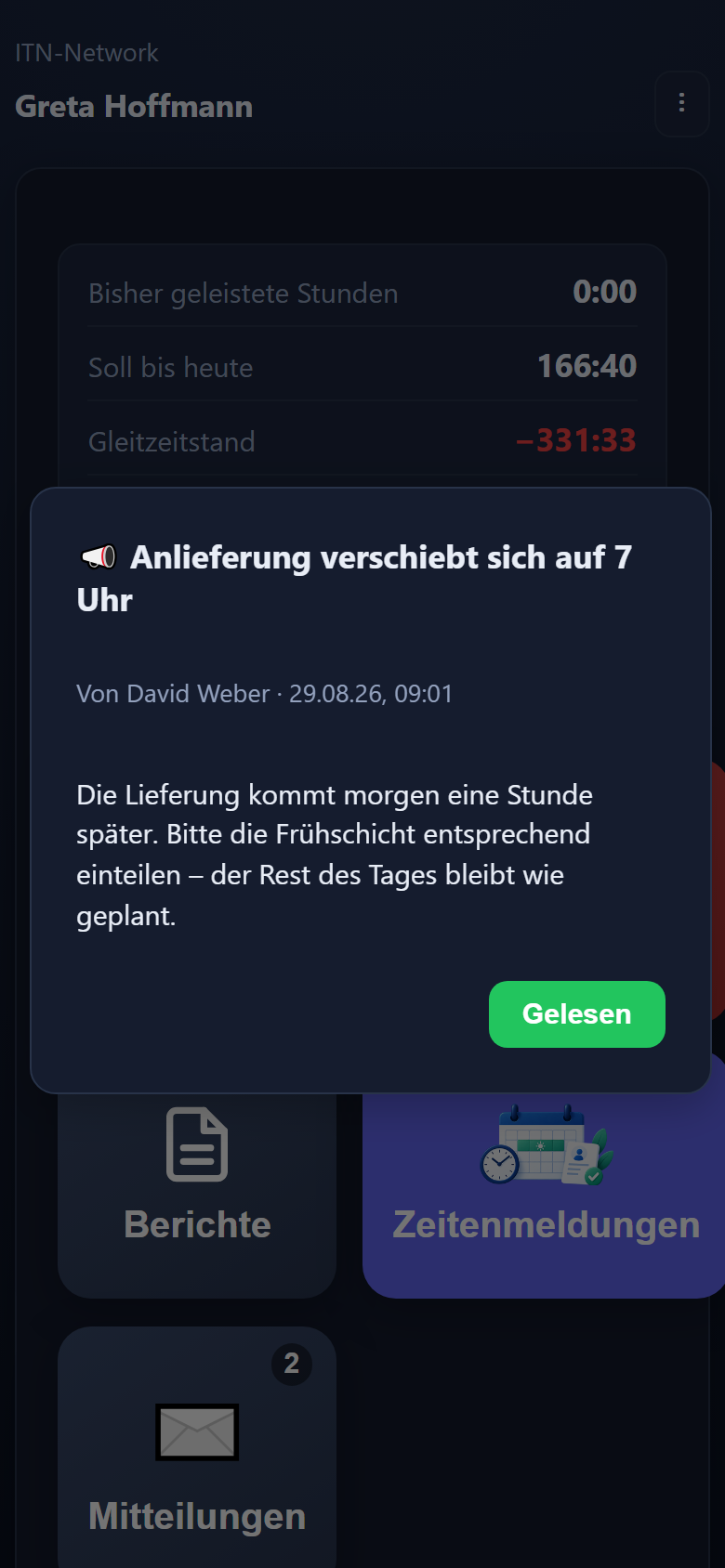
A message goes to one person, a department or everyone. Marked important, it opens as a window the next time the app starts and closes only on acknowledgement. Afterwards you can read off who has seen it.
Working time models apply per person: daily target, break rule and premiums. Part-time, casual and full-time run side by side in the same plan and are still calculated separately.
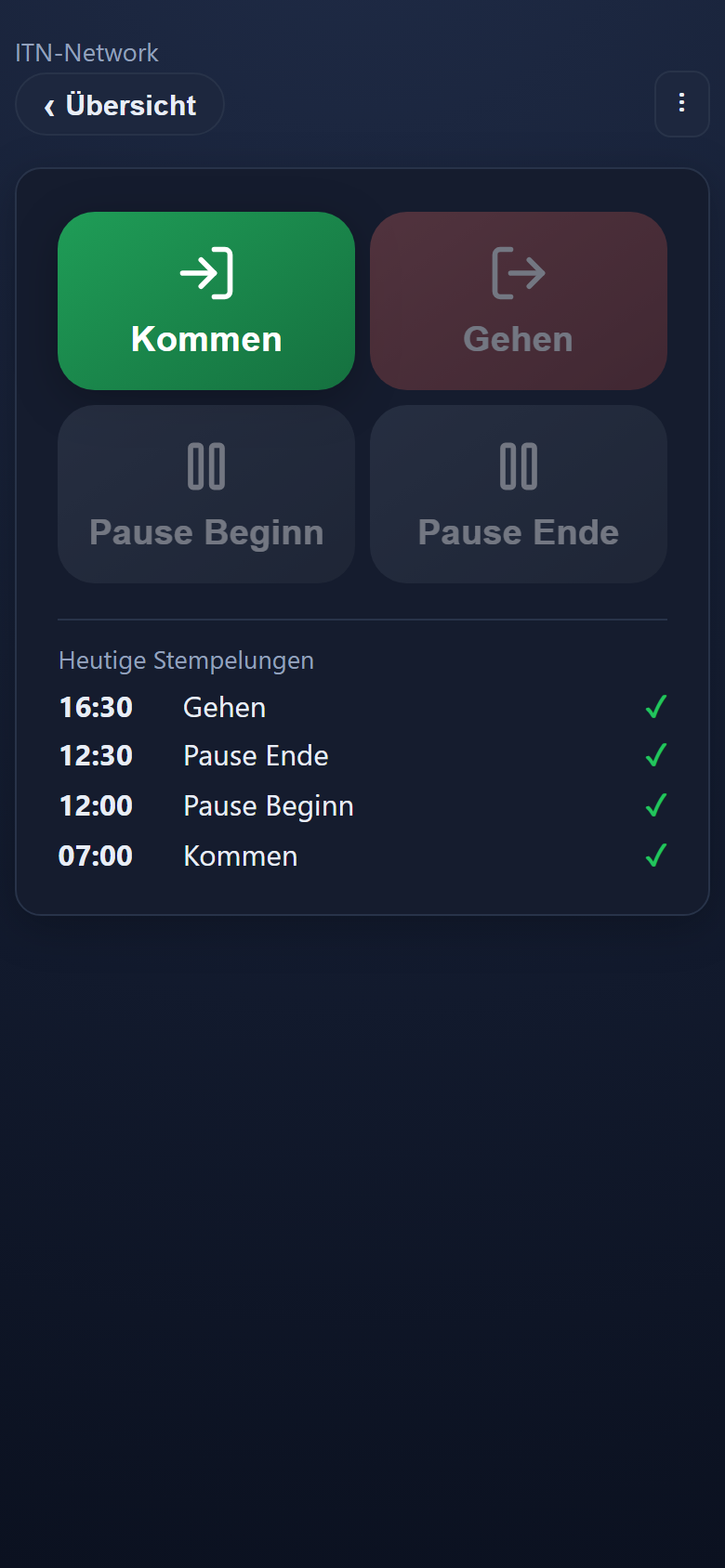
In the day view the plan and the clock-ins sit side by side. Whoever takes the late shift after being rostered for the early one is calculated as a late shift — and the difference stays visible.
More on this: shift planning · staff messages · leave and absences · feature reference
Each shift is created once with a time frame, a break rule and a colour. After that you spread it across the monthly grid — over several days or several people. The colour is what identifies the shift later in the grid and on the printed plan.
Yes, through the rhythm. There you set which shift applies in week 1, week 2 and so on; the plan is then calculated ahead. If the rhythm is changed, the change applies from the chosen day onwards.
Through a message to those affected or to everyone. Marked important, it opens as a window the next time the app starts and closes only on acknowledgement. In the overview you see who has read it.
Yes. The mobile app has a tile showing their own shifts. For the notice board there is also a landscape PDF of the monthly grid with a colour key.
Through their own working time models. Each person gets their daily target, their break rule and their premiums; all of them sit in the same plan and are still calculated separately.
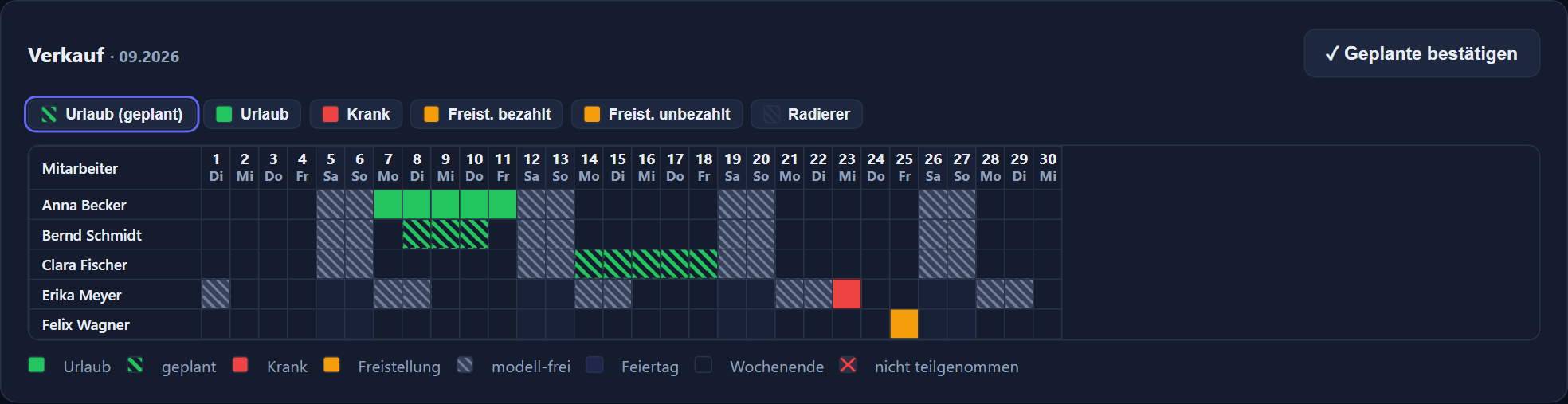
Absences are drawn graphically across the days and appear in the same picture as the duties. Requests run digitally via the line manager, so that the plan and the absence match.
2.90 € per employee and month plus VAT, with no minimum term and cancellable monthly. Shift planning, leave management, staff messages, the mobile app and the DATEV export are included.
Tell us how many people you roster and which duties there are. We will rebuild one week of it and show you how it connects to the time tracking.
Until it is ready, please write to us directly — you will hear back just as quickly. The button below opens your mail programme with a prepared draft that already lists the details we need in order to quote.
Or simply write to info@itn-network.de. Please do not send us credentials or any of your employees' time records — figures are enough for a quote.